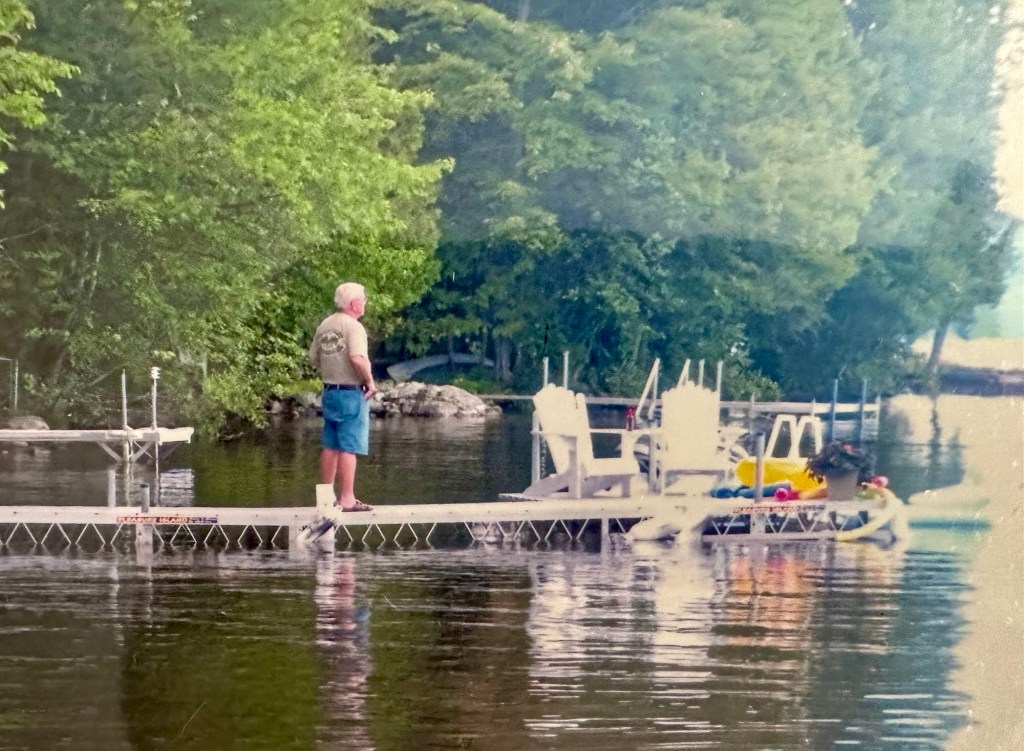
At the edge of Maranacook Lake in Maine, nestled among tall pines and overlooking a quiet cove with a sandy beach, stood a beautiful old home with a porch that offered million-dollar views. From that porch, you could see the lake sparkle in the morning sun, boats gliding past like whispers, and loons calling across the water. A porch swing creaked gently in the breeze, and just off to the side, a quiet hammock was nestled between two pine trees, swaying with the rhythm of the wind.
Behind the house, past patches of blooming daffodils and clusters of wildflowers swaying in the breeze, was a garden that had been left untended.
It had once been full of life, lovingly planted and cared for by Debbie’s mother and father, who spent countless summers coaxing life from the soil. It was a place of laughter, muddy knees, and cool drinks in the shade. But as time went on—and Debbie grew older and eventually moved out of the house—the garden began to fade. Weeds crept in, vines tangled across the ground, and the once-bright flowers disappeared beneath the silence.
Most people visiting the lake were drawn to the cove’s sandy shore or the peace of the porch, never bothering to wander behind the house. But Debbie did.
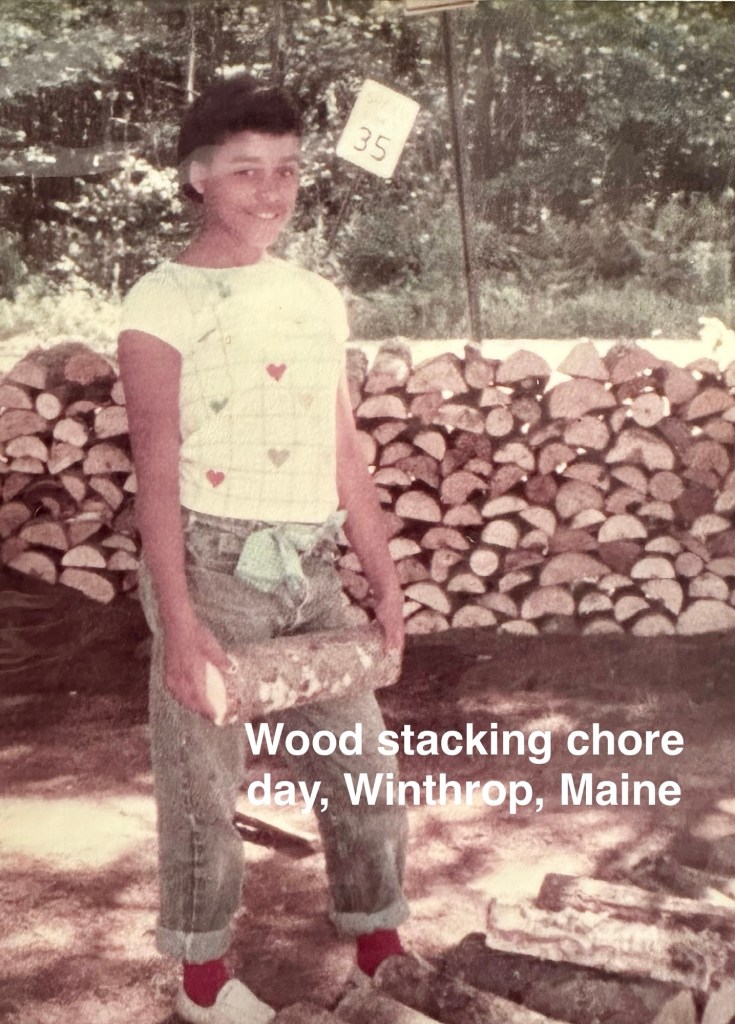
She was twelve when it really began—curious and thoughtful, with callused palms from climbing trees. She had spent every summer at the lake house since she could remember, and even as her parents grew busy with work and life, she still felt something magical in that forgotten patch of earth.
One quiet morning, with the lake still and sunlight flickering through pine needles, Debbie found a small trowel and a packet of sunflower seeds tucked in a drawer of the old garden shed. The soil in the garden was hard—more stone than earth—but Debbie knelt and began to dig. She didn’t know exactly why. Maybe she missed the way things used to be. Maybe she just needed something of her own to care for.
Each day, Debbie returned. She pulled out weeds, cleared fallen branches, and spoke softly to the seeds she placed in the stubborn ground.
Weeks passed. Nothing grew.
Her friends teased her when they visited. “You’re wasting your time,” one of them said. “That soil’s dead.” Debbie wanted to believe them. But something deep inside told her not to quit—not yet.
Then one morning, just after the sun rose above the lake and lit the cove in gold, she saw it: a tiny green sprout pushing through the dirt. It was barely there, trembling in the breeze, but to Debbie it was everything. She doubled her efforts—watering, caring, believing.
By mid-summer, the once-lost garden had come to life. Sunflowers turned their faces toward the lake, daisies nodded in the wind, and wild strawberries peeked out from under leafy vines. Bees buzzed lazily in the sunlight. Birds chirped from the birch trees. Visitors who came for the lake found themselves wandering to the garden, drawn by its unexpected beauty.
Her parents noticed too. One afternoon, her mother stepped into the garden and stood in quiet awe. “I almost forgot what this felt like,” she said. Her father joined her later, pulling out an old watering can with a half-smile. Slowly, the garden began to bring the whole family back together.
Years passed. Debbie left home, as all children do, and built a life of her own. The house by the lake was eventually sold, passed on to new hands and new stories. But the memories remained.
Debbie often thought of that porch swing, the breeze in the hammock, and the stubborn soil behind the house that taught her to believe in second chances.

She learned that even the toughest places can bloom with a little patience. That healing doesn’t come overnight, but it always begins with hope. And most of all, she discovered that some of the most beautiful things grow where no one expects them to.
And no matter where life took her, Debbie never stopped planting seeds.


 Harvesting Life’s Lessons
Leave a comment